FiberQ
FiberQ
FiberQ
Explore our premium range of integrated magnetic jacks and multi-port stacked configurations designed for telecommunication networks and high-speed data computing.
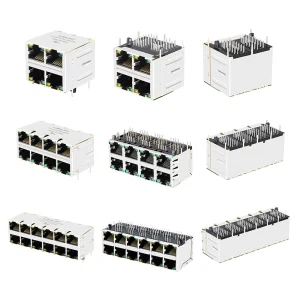
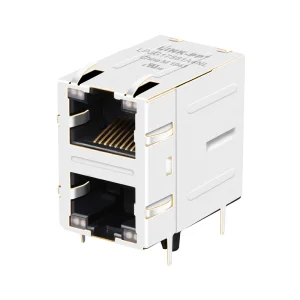
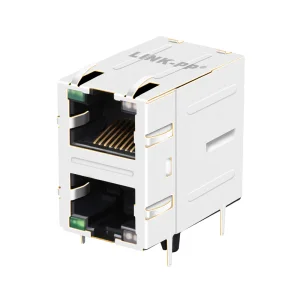
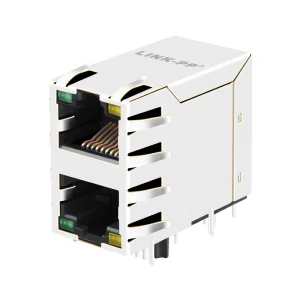
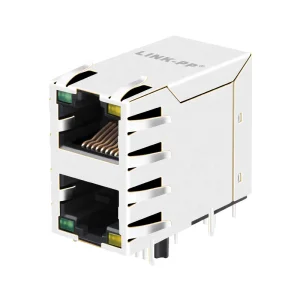
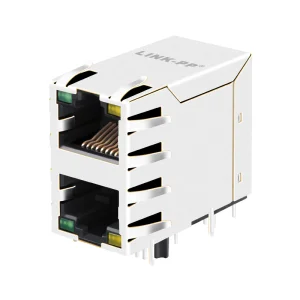
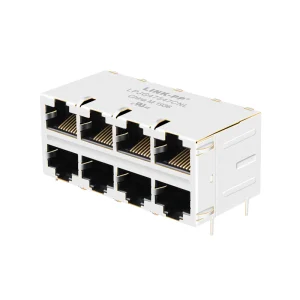
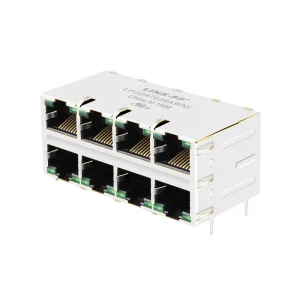
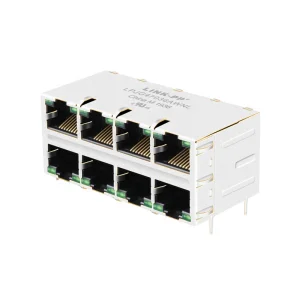
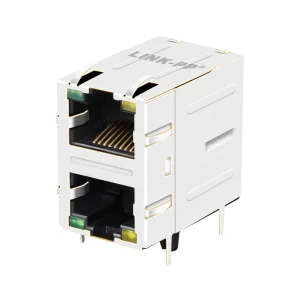
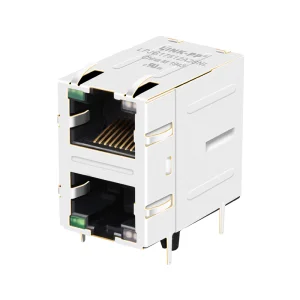
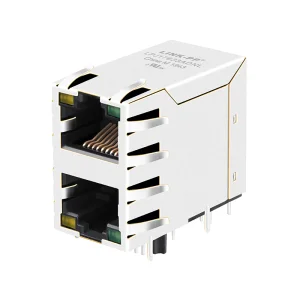
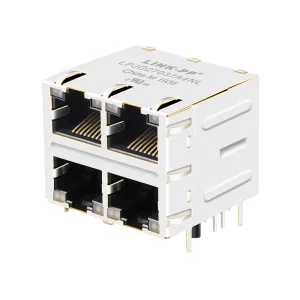
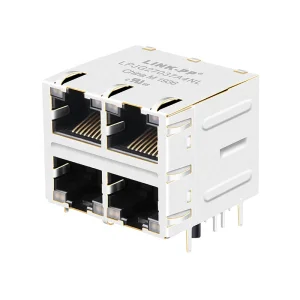
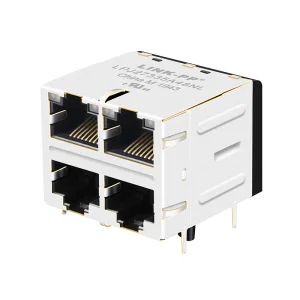
In modern telecommunication architectures, rack unit space is a premium asset. Standard single-port RJ45 connectors present structural boundaries when scaling network switches, routers, and industrial gateways. This bottleneck is addressed by Stacked Port RJ45 Connectors (often configured as 2x1, 2x2, 2x4, 2x6, or 2x8 port modular layouts). By vertically stacking two rows of female RJ45 connectors onto a single PCB footprint, system designers can double the port density of their systems within the exact standard horizontal chassis width limits.
These connectors are not mere passive sockets; they integrate complex magnetics (Integrated Connector Modules or ICMs) to support ethernet transmission speeds ranging from 10/100 Base-T, 1000 Base-T (Gigabit Ethernet) up to ultra-fast 2.5G, 5G, and 10G Base-T speeds. This makes them pivotal in routing next-generation broadband traffic safely without packet loss or severe EMI degradation.
Integrating the necessary magnetics, resistors, and capacitors directly inside the RJ45 housing (MagJack configuration) shortens the path between the interface and the PHY chip. This optimization significantly lowers Electromagnetic Interference (EMI), controls Return Loss, and boosts ESD protection—ensuring robust signal integrity at data rates exceeding 10 Gbps.
How high-density ethernet connection nodes fuel global industrial progress and AI-driven data centers.
Hyperscale cloud data centers demand maximum port capacity. Multi-port stacked RJ45 connectors allow switch-ASIC interfaces to match physically with 1U/2U configurations, driving high-volume virtualization protocols.
Factory floors require vibration-proof and EMI-protected ports. Shielded stacked connectors with grounding EMI tabs provide stable performance in harsh environment industrial control rooms.
Deploying 5G networks relies on robust copper connection points at base stations. Stacked ports accommodate PoE+ and PoE++ power injection directly through data lines to power outdoor transceivers.
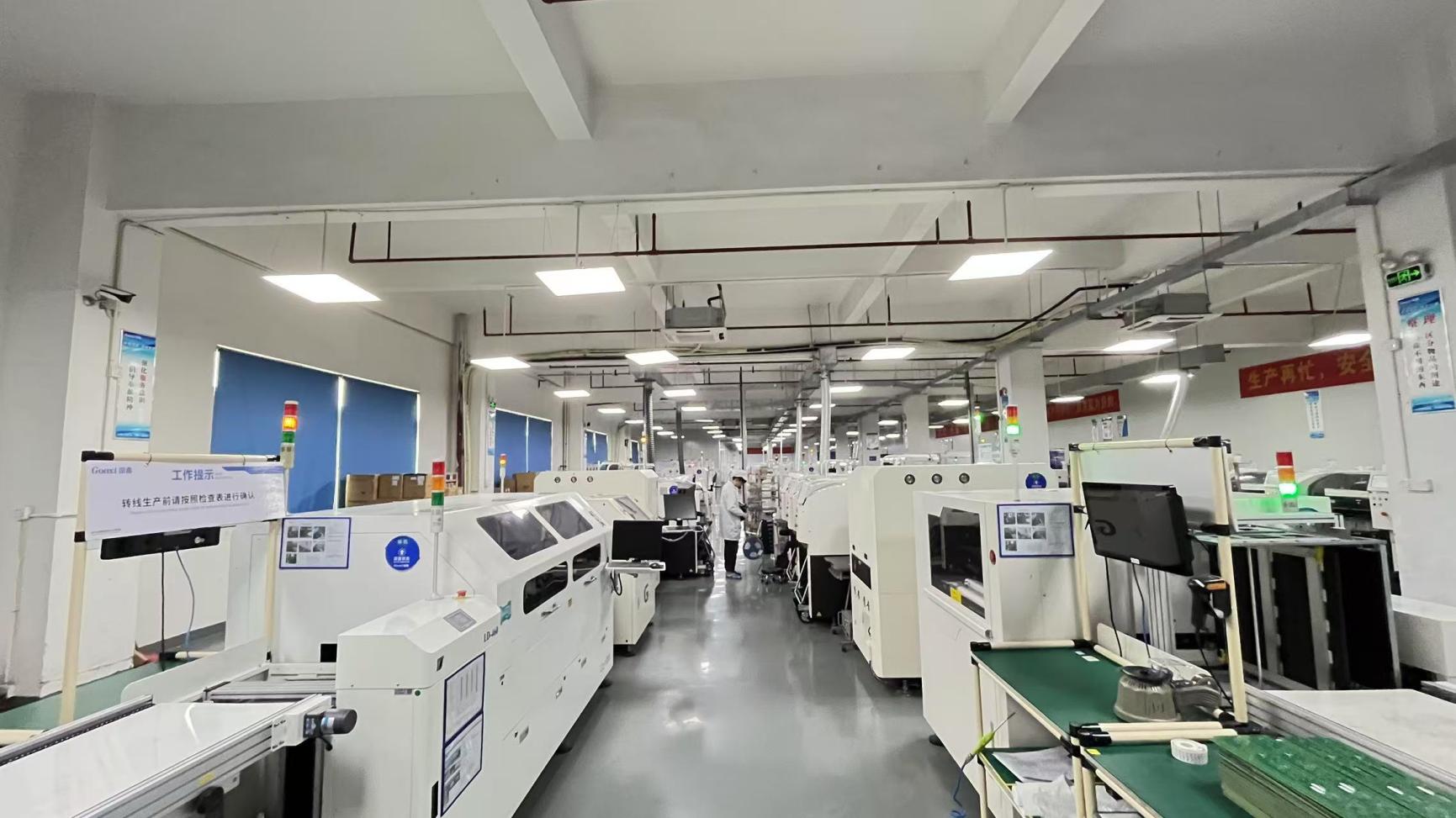
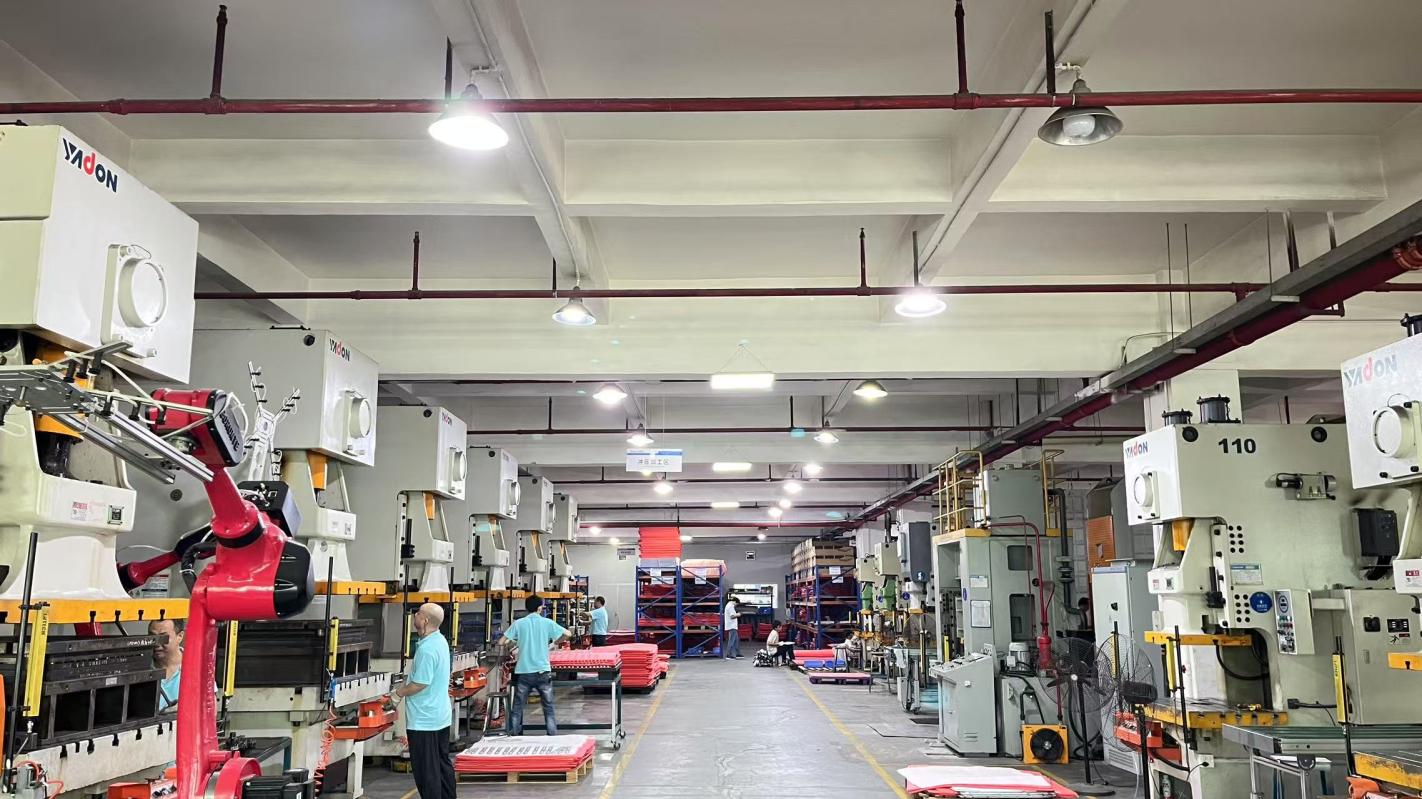
As a global leader in advanced photonic communication and copper networking solutions, FiberQ Photonics Technology Co., Ltd. represents the peak of reliability and engineering innovation. Founded in 2015, we operate a state-of-the-art facility covering over 12,600㎡. Originally focused on optical transceivers, our technological scope now expands to advanced integrated RJ45 connectors to meet customer demands for hybrid optic-copper setups.
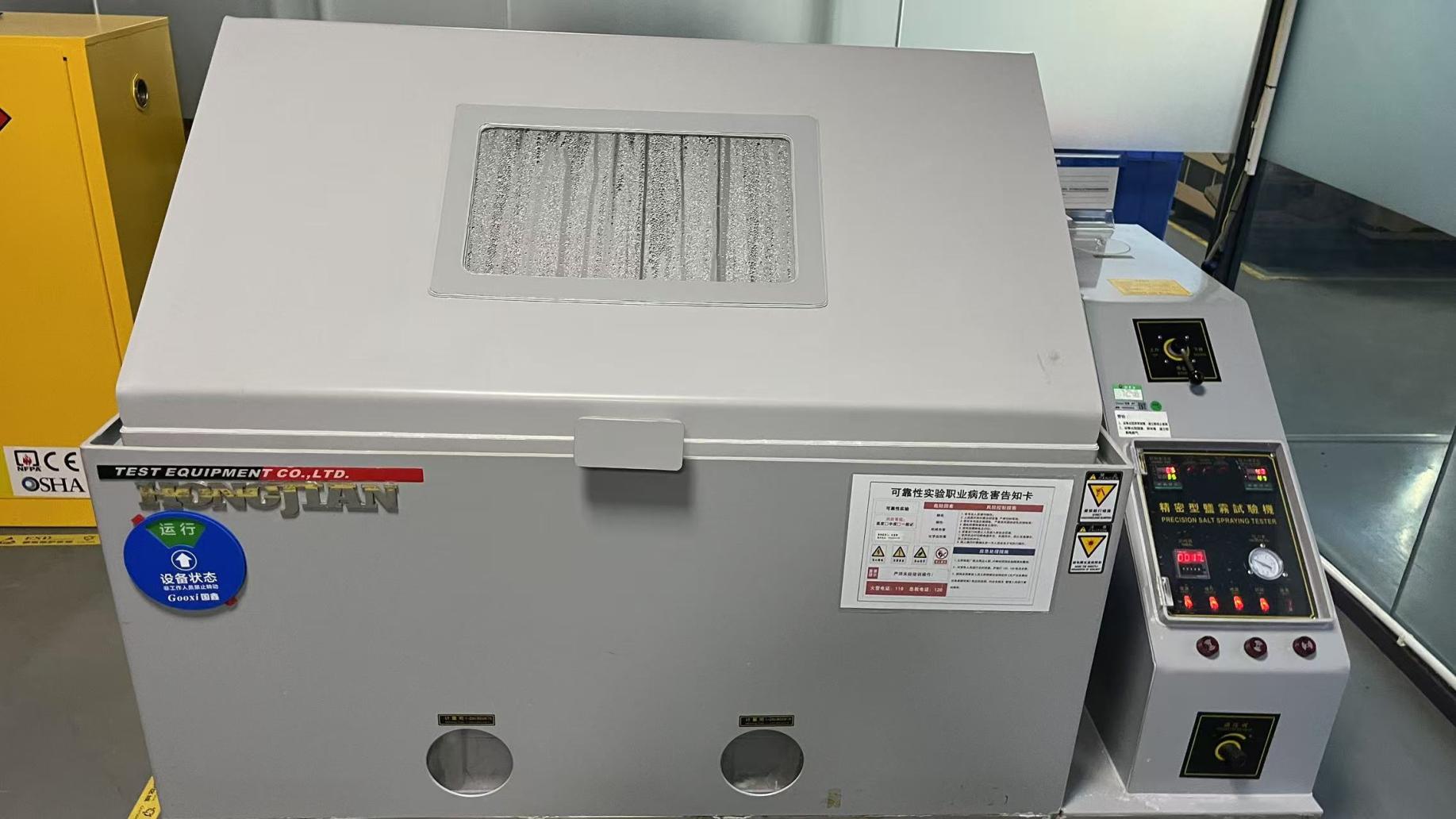
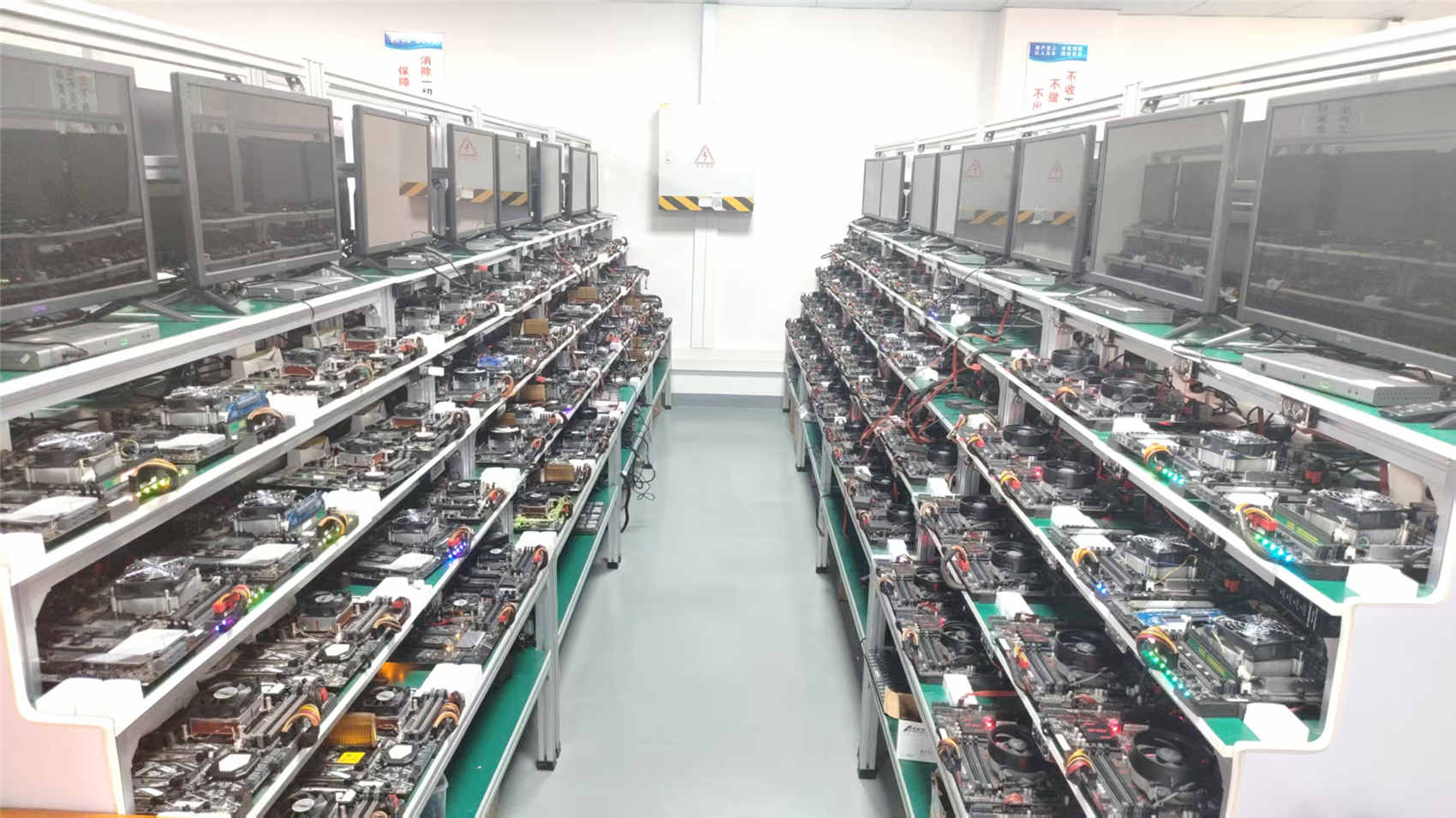
Our quality control operations run with meticulous discipline. A team of 62 experienced inspectors guarantees total reliability by running automated optical performance testing, high-temperature aging tests, and manual optical/electrical checks. With 12 years of industry experience and 6 years of stable export performance yielding over USD 9.5 Million annually, we partner with 1,450 supply chain leaders to source premium gold platings and magnetic alloys.
Ensuring our electrical connections match legal frameworks and environmental standards globally.
All stacked RJ45 connectors sent to North America strictly conform to FCC Part 68 physical dimensions and electrical contact rules. We offer custom UL94V-0 rated housing polymers and options compliant with TAA (Trade Agreements Act) regulations, meeting the strict requirements of government networks, military communication systems, and public healthcare IT layouts.
For European network deployment, our components carry CE markings and align with the latest RoHS (Restriction of Hazardous Substances) and REACH (Registration, Evaluation, Authorization, and Restriction of Chemicals) standards. Lead-free solderability testing is performed on every batch to verify full integration compatibility with automated wave solder and reflow production lines.
Within Japan and broader APAC technology nodes, our stacked ports support VCCI Class B electromagnetic emissions requirements. We employ special phosphor bronze contacts plated with 50 micro-inches of gold to resist corrosion in hot and humid Southeast Asian environments, maintaining constant contact resistance below 20 mΩ over decades.
Charting the progress of copper network connection tech over the next ten years.
As server and device connectivity shifts from Gigabit speeds towards 2.5G and 10G Base-T Ethernet, crosstalk management between vertically stacked ports gets significantly harder. FiberQ engineers are incorporating physical internal shield separators to deliver -40dB NEXT performance at frequencies up to 500 MHz.
Next-generation stacked RJ45 connectors feature integrated multi-color LED indicators that run directly off the physical PHY status. We are designing low-footprint light pipe arrays to provide clear, bright visual feedback without generating electrical noise on the data pins.
Combining Power over Ethernet (PoE++ delivering up to 90W) and high speed in a stacked layout creates significant heat. Our future catalog incorporates custom thermal vents and liquid crystal polymer (LCP) plastics to survive continuous temperatures reaching 125°C.
Expert technical insights regarding stacked port design and deployment.
An Integrated Connector Module (ICM) places the magnetics directly inside the shielded RJ45 metal enclosure. This offers three critical engineering advantages: 1) It reduces PCB area by up to 50%, allowing higher density configurations; 2) It isolates high-frequency noise close to the physical connection port, boosting overall EMI and electromagnetic compatibility; and 3) It decreases trace routing complexities on the motherboard, reducing the likelihood of cross-channel crosstalk.
EMI fingers are springy metallic strips built around the outer shell of the RJ45 female socket. When the connector is mounted through the panel chassis opening, these fingers compress against the metal edge of the chassis. This creates a low-impedance ground path that redirects high-frequency noise safely to the system enclosure ground, preventing radiation leakage from disrupting adjacent circuitry.
Yes. However, standard stacked connectors are prone to heat build-up under heavy currents. To support PoE+ (IEEE 802.3at) and PoE++ (IEEE 802.3bt), connectors must feature thicker contact wire sizes and customized pins with lower DC resistance. Thermally resistant plastics like LCP are also required to prevent port damage under continuous current loads.
For industrial applications, we use through-hole solder pins (Wave Solder layout) combined with structural snap-in plastic pegs. This dual mounting system resists heavy mechanical vibration and stops board cracking caused by manual cable insertion and extraction stresses.
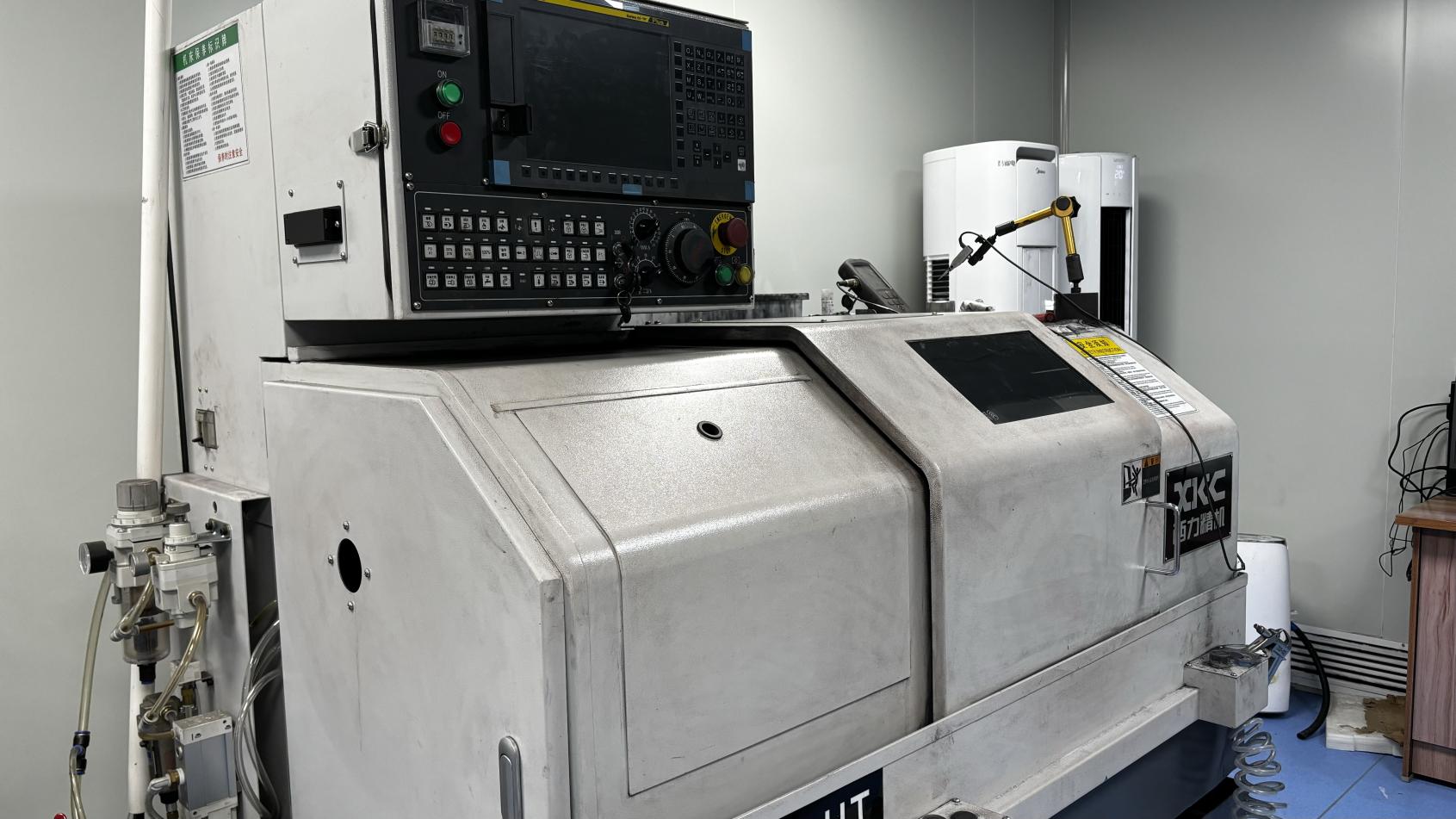
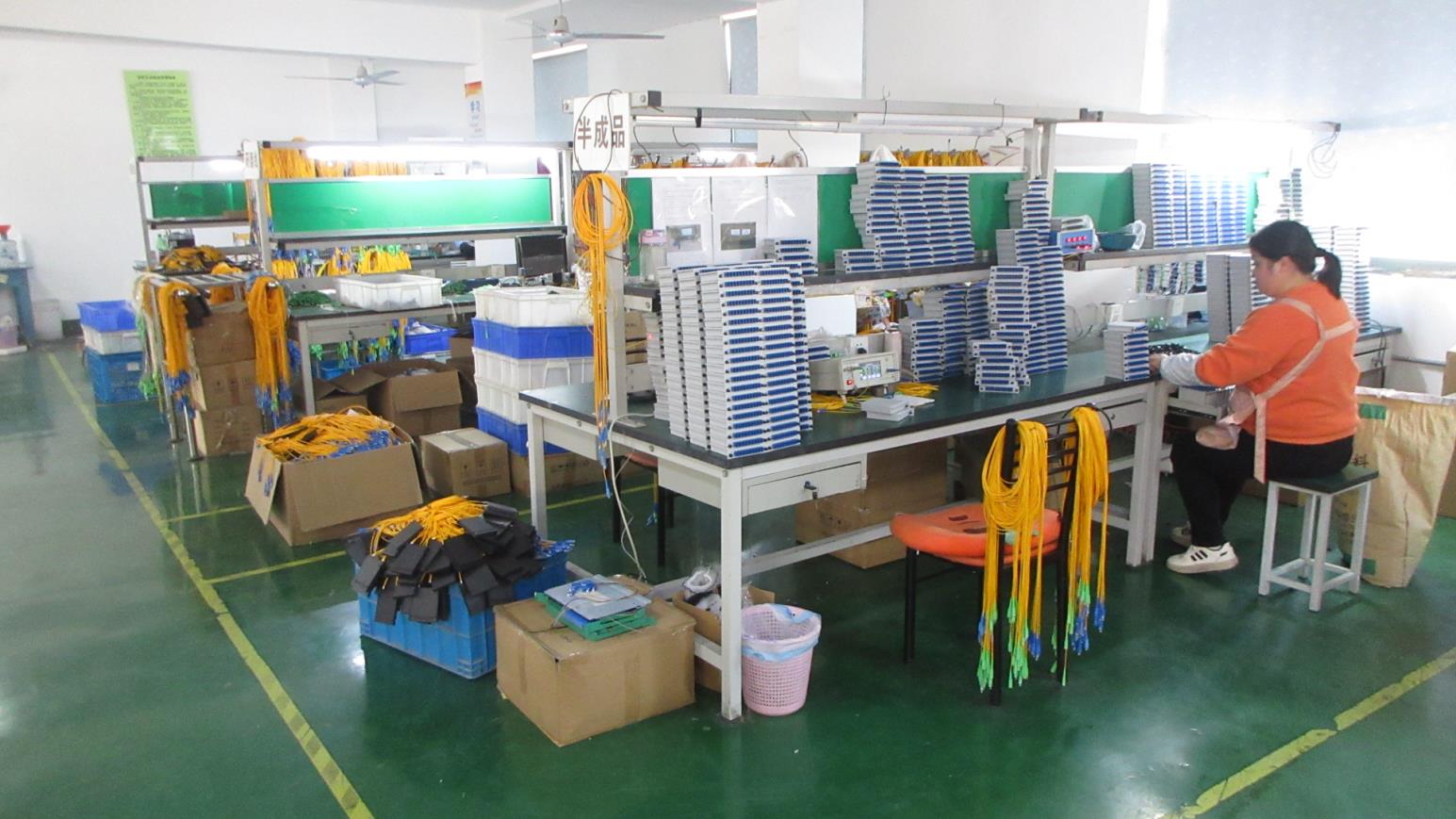
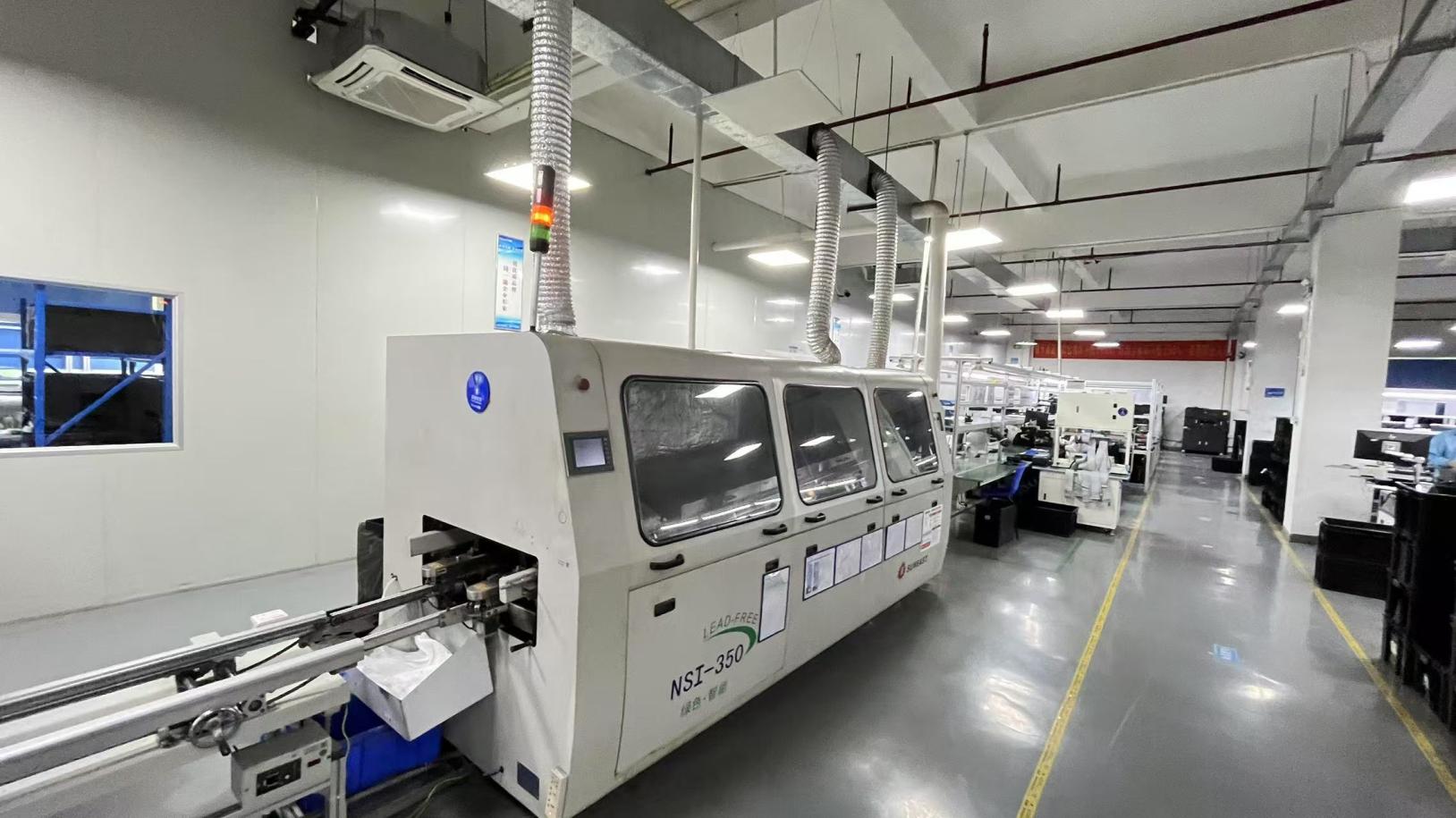
Inside the 12,600㎡ high-tech operations facility of FiberQ Photonics Technology.
Industry-standard layout sizes and compatibility models for telecommunications infrastructure.